Short answer: a 165-185 GSM knit of 88-92% polyester with 8-12% spandex, in pique, interlock or mesh, moves sweat fastest. Polyester's moisture regain is roughly 0.4% against 8.5% for cotton (ASTM D1909), so it transports liquid along the fibre surface instead of swelling with it and drying slowly.
MOQ: 50 pcs per colorway. Lead time to EU: 28-35 days DDP. Collar stays flat 50+ industrial washes.
Written for buyers specifying wicking for golf clubs, brands, distributors and corporate programmes in the US and EU. If you only need a soft clubhouse shirt for mild weather, the answer changes — see section 6.
Updated: 2026-09-24 · Technical review for Fabric
Contents
- 1. The short answer
- 2. Why polyester wicks and cotton does not
- 3. Fibre families compared
- 4. Knit construction matters as much as fibre
- 5. How wicking is measured — and how to specify it
- 6. Blends: where they help, where they compromise
- 7. Finishes: does wicking wash out?
- 8. How to select
- 9. RFQ checklist
- FAQ
- Related reading
- Sources
1. The short answer
Ranked for moisture transport in golf conditions, from best to worst:
| Rank | Fabric | Why it sits here |
|---|---|---|
| 1 | 88-92% polyester / 8-12% spandex, pique or interlock, 165-185 GSM | Lowest regain, fastest transport, holds shape and print |
| 2 | Recycled polyester (rPET) / spandex, same construction | Chemically the same PET, so the same wicking — documented instead of assumed |
| 3 | Polyester / cotton blend, 60/40 | Sweat moves, but slower; softer hand, more cotton-like feel |
| 4 | Viscose-based cellulosics (incl. bamboo viscose) | Absorbs well, releases slowly — comfort fibre, not a transport fibre |
| 5 | Cotton | Holds water, gets heavy, dries slowest of the group |
For a tournament shirt worn in heat, ranks 1 and 2 are the answer. For a mild-weather corporate uniform where feel outranks drying speed, rank 3 is a defensible compromise. Ranks 4 and 5 are chosen for reasons other than wicking.
2. Why polyester wicks and cotton does not
Two mechanisms decide how a shirt handles sweat, and only the first is about the fibre.
Regain — how much water the fibre itself absorbs. Polyester takes up about 0.4% of its dry weight; cotton about 8.5% (ASTM D1909). A cotton shirt therefore absorbs sweat into the fibre, gains weight and stays damp, while polyester leaves the liquid on the surface where it can spread and evaporate. This is also why cotton feels cold and heavy on a back nine and polyester does not.
Capillary transport — how fast liquid moves along the fabric. The gaps between yarns and filaments act as capillaries. Polyester's smooth, often profiled filament surface wets and drains readily once a hydrophilic treatment is applied, so sweat spreads across a wide area and evaporates from it. Cotton's fibre surface is convoluted and holds water in place rather than passing it along.
The practical consequence: polyester does not "absorb" sweat — it moves it. That is the whole point, and it is why the fibre family is the first thing to fix in a spec.
3. Fibre families compared
| Fabric | Moisture regain | Transport behaviour | Drying | Hand feel | Use it for |
|---|---|---|---|---|---|
| Polyester / spandex (88-92 / 8-12) | ≈0.4% | Fast capillary spread | Fastest | Smooth, dry touch | Hot-climate play, sublimated prints |
| Recycled polyester (rPET) / spandex | ≈0.4% | Same as virgin PET | Fastest | Same as virgin | Same use, with recycled-content documentation |
| Polyester / cotton 60/40 | ≈3-4% (blend) | Moderate | Medium | Softer, cotton-like | Corporate uniforms, mild climates |
| Cotton | ≈8.5% | Absorbs and holds | Slowest | Soft, heavy when wet | Off-course and retail wear |
| Viscose cellulosics (bamboo viscose) | ≈11% | Absorbs, releases slowly | Slow | Very soft, fluid drape | Lifestyle pieces, odour-control stories |
| Wool (merino) | ≈16% | Buffers vapour, not liquid | Slow | Warm, premium | Cold-weather layering |
Regain figures for the single fibres are the commercial values in ASTM D1909; the blend figure is the weighted midpoint of its components. Read the column as "how much sweat the fibre keeps inside itself", not as a quality ranking.
One trap worth naming: "bamboo charcoal" describes an additive, not a fibre. It can be charcoal powder dispersed in polyester, or a bamboo-derived viscose. The first behaves like polyester on sweat; the second behaves like viscose and dries slowly. Ask which base fibre your supplier is quoting before you accept the wicking claim.
4. Knit construction matters as much as fibre
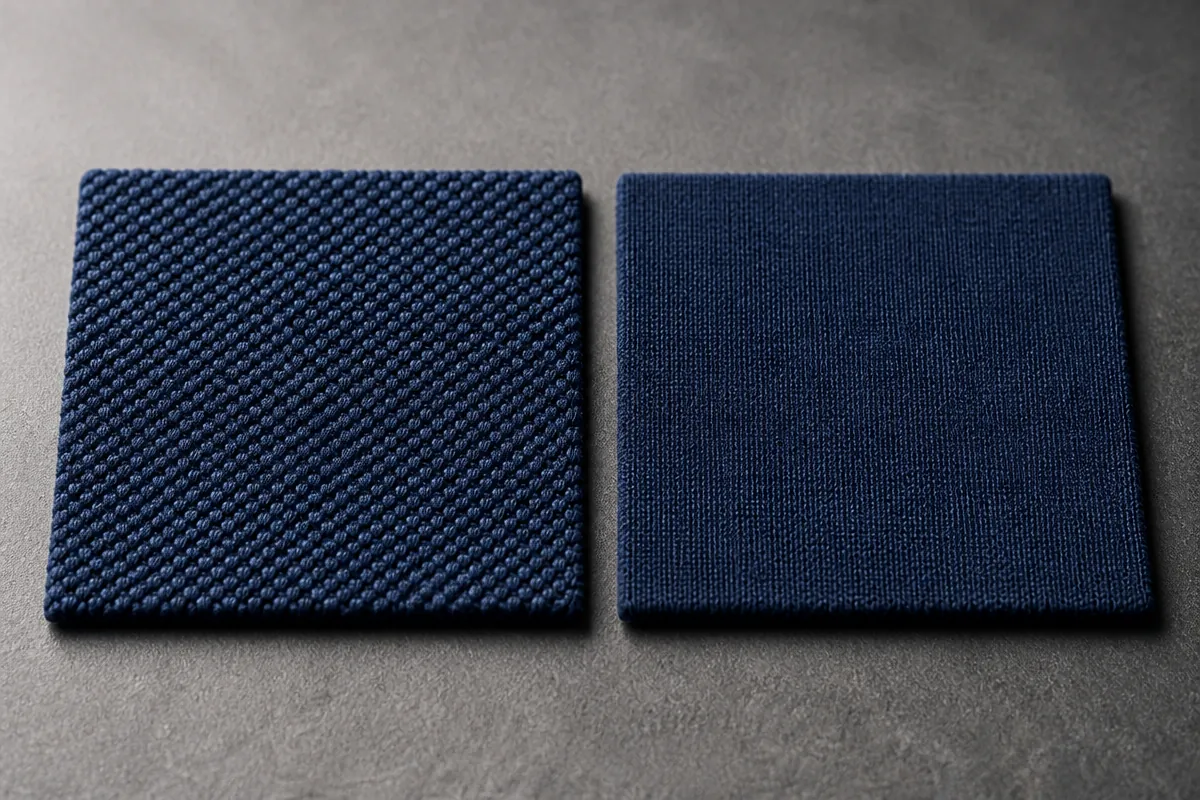
Fibre sets the ceiling; the knit decides how close to that ceiling the shirt actually performs, because construction controls surface area, capillary channels and airflow.
| Construction | Structure | Airflow | Typical GSM | Behaviour on sweat | Best for |
|---|---|---|---|---|---|
| Pique | Raised waffle face, high surface area | High | 170-200 | Wide spread, quick evaporation | Classic polos, hot climates |
| Interlock | Smooth two-faced double knit | Medium | 165-185 | Even transport both faces | Sublimation, all-over print |
| Mesh | Open knit with visible holes | Highest | 150-180 | Fastest air exchange | Extreme heat, underlayers |
| Jersey | Single knit, smooth face | Low-medium | 150-175 | Lighter, less structure | Lightweight shirts |
| French terry | Looped reverse side | Low | 220-280 | Holds moisture in the loop | Cool-weather and casual |
Two rules follow. First, a very light jersey is not automatically cooler — below roughly 150 GSM the fabric can cling and saturate instead of spreading. Second, French terry on a hot day works against you: the loop pile is exactly where moisture collects. A 165-185 GSM pique or interlock is the band that most golf programmes settle on, and it is what we knit most often.
5. How wicking is measured — and how to specify it
"Moisture-wicking" on its own is a marketing word. Specify it as a test method and a report, or you cannot compare two quotes. The methods that matter:
| Method | What it measures | What to ask for in the RFQ |
|---|---|---|
| AATCC 195 | Liquid moisture management: absorption, spreading, one-way transport and drying rate, combined into an overall moisture management capacity (OMMC) | The full index set plus the OMMC value, the lab name and the report number — not just "pass" |
| AATCC 197 | Vertical wicking — how fast liquid climbs a suspended strip | Wicking height in mm at a stated time (e.g. 5 and 30 minutes) |
| AATCC 198 | Horizontal wicking — how far liquid spreads across the surface | Spread distance or speed at a stated time |
| AATCC 199 | Drying time at body temperature | Drying time in minutes, at the stated temperature |
AATCC 195 is the single most useful one for a golf shirt because it reports transport and drying together rather than only absorption. Its Chinese equivalent is GB/T 21655.2, so if your supplier tests in China, ask for that number instead and expect the same style of result.
Do not accept a wicking claim without a number. Two shirts can both be called "moisture-wicking" and perform very differently; the test report is the only thing that separates them.
6. Blends: where they help, where they compromise
- Polyester / spandex (8-12%). The spandex is there for stretch and shape recovery, not for wicking. It keeps the shirt moving with the swing and helps the collar and seams hold their shape through industrial washing. This is the default specification for a performance polo.
- Polyester / cotton 60/40. The cotton fraction buys softness and a less technical look, and costs you drying speed — every point of cotton raises regain and time to dry. Reasonable for a corporate shirt in a mild climate or an off-course uniform.
- Cotton / polyester fleece. Knitwear for cold mornings and layering. It is chosen for warmth, and it will not manage sweat the way a pique polo does.
- Viscose cellulosics. Soft, fluid drape, and often marketed on odour control. Their regain is high, so they hold moisture rather than moving it — a good lifestyle fabric, a poor tournament fabric.
The general rule: blending cotton in makes a shirt feel better and dry slower; blending spandex in changes fit and recovery, not transport. Only the cotton fraction trades against wicking.
7. Finishes: does wicking wash out?
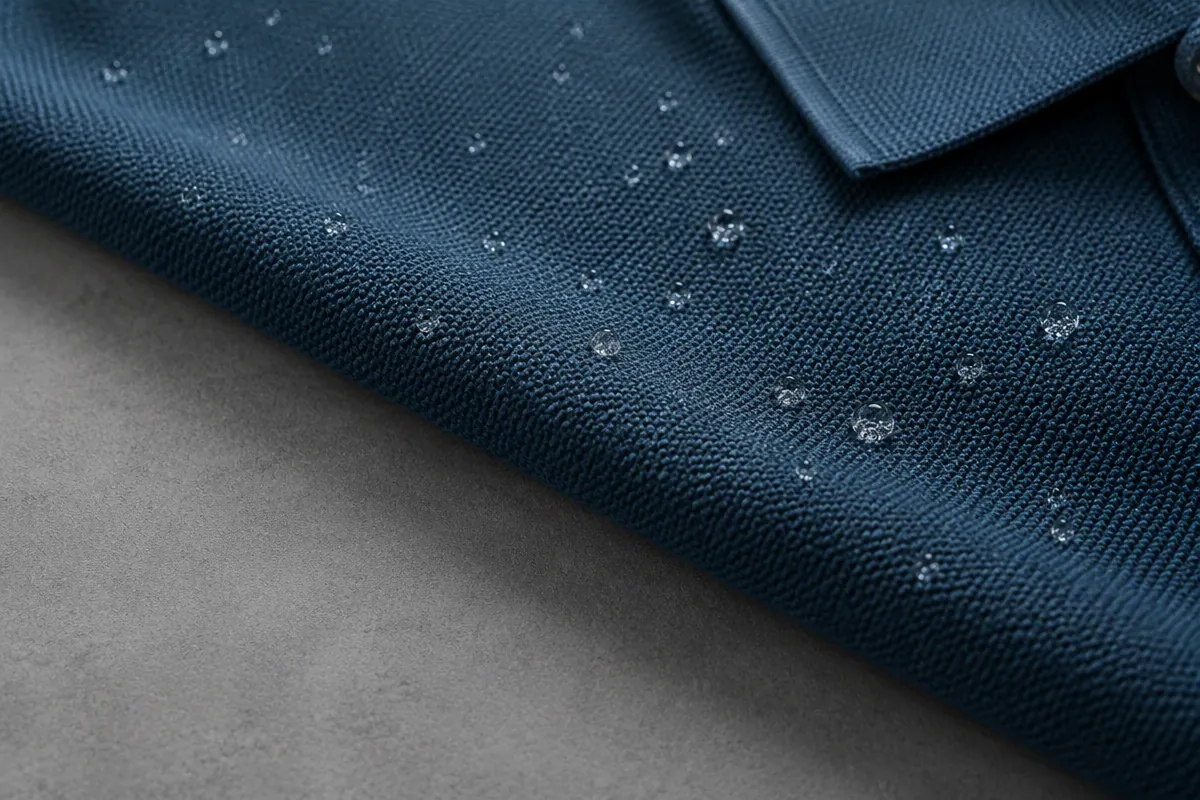
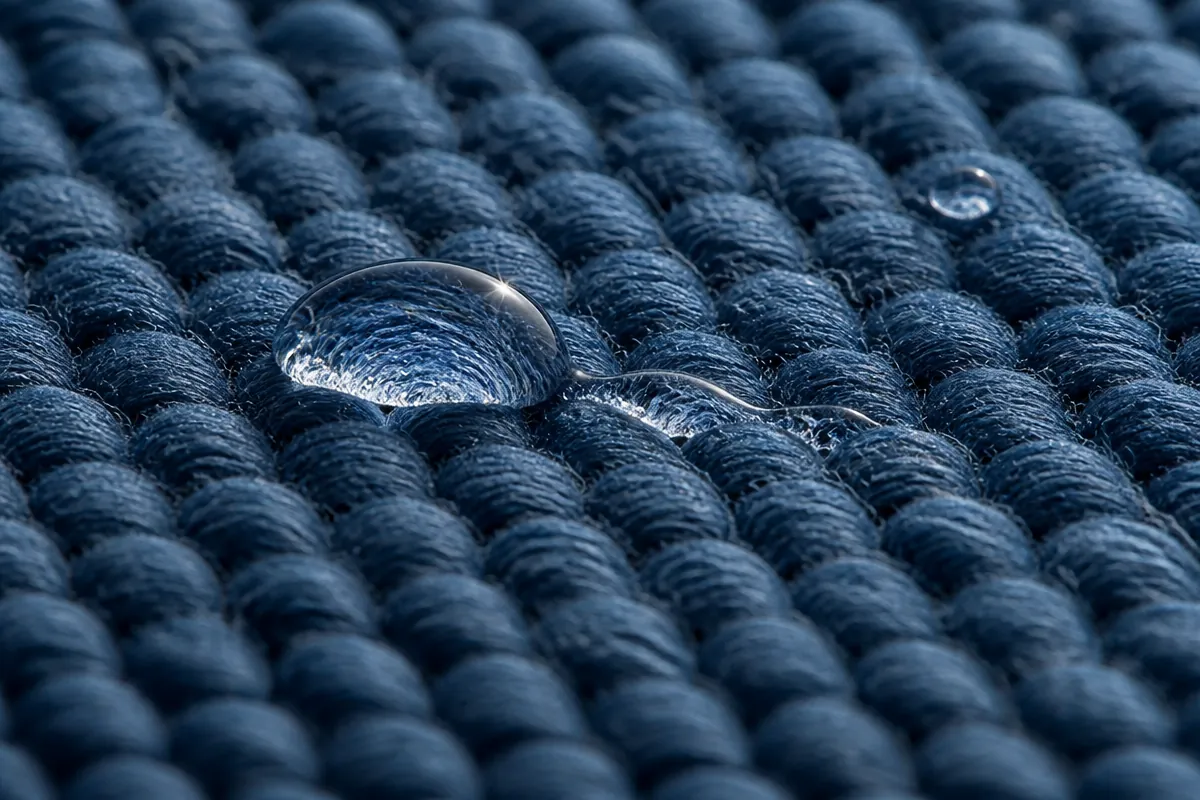
Untreated polyester is mildly hydrophobic — water beads rather than spreads. Wicking performance therefore depends partly on a hydrophilic finish applied to the yarn or the fabric, and how permanently that finish is anchored decides whether the shirt still works after a season of industrial laundering.
- Topical finishes sit on the surface and fade with washing.
- Permanent (yarn-level or durable) treatments last far longer, and cost more.
You cannot tell which one you were sold by looking at the shirt. Ask for the AATCC 195 result to be re-run after laundering — commonly after 20 and 50 industrial washes — and put the retention number in the purchase order. A wicking claim tested only on greige fabric tells you nothing about month six.
One related point: wicking does not require water repellency. If a supplier offers to add a durable water-repellent finish to a wicking shirt, ask whether it is PFAS-free and get it in writing, because the two functions are independent and only one of them carries a compliance question.
8. How to select
- Start from the climate and the activity. Hot, active play → 88-92% polyester / 8-12% spandex pique or interlock at 165-185 GSM. Mild, low-activity corporate wear → a poly/cotton blend is a defensible trade of drying speed for feel.
- Then fix the construction. Sublimated all-over artwork → interlock for a smooth print face. Solid colours with a chest crest → pique for airflow and structure.
- Write the wicking spec as a standard. Name AATCC 195 (or GB/T 21655.2) and require the indices and the OMMC, plus AATCC 199 for drying time.
- Require the washed result. Ask for wicking re-tested after 20 and 50 industrial washes, and a stated retention.
- Confirm the base fibre behind any branded additive. "Bamboo charcoal", "cooling", "ionic" — ask whether the base is polyester or viscose before accepting the sweat claim.
9. RFQ checklist
Copy these into your RFQ. A supplier who answers all seven in numbers is worth shortlisting:
- Fibre composition and knit construction, with GSM — not just "performance fabric".
- AATCC 195 indices and OMMC value, with lab name and report number.
- AATCC 197 vertical wicking height and AATCC 199 drying time.
- Wicking result re-tested after 20 and 50 industrial washes, with the retention percentage.
- Whether the hydrophilic finish is topical or permanent, and its PFAS status in writing.
- Base fibre behind any branded additive (bamboo charcoal, cooling yarn).
- MOQ per colorway and lead time DDP to your market, contractually: ours is 50 pcs per colorway and 28-35 days to EU ports.
FAQ
Q1. What is the single best fabric for moisture-wicking golf shirts?
A 165-185 GSM knit of 88-92% polyester with 8-12% spandex, in pique or interlock. Polyester's moisture regain is about 0.4% versus 8.5% for cotton (ASTM D1909), so it transports sweat along the surface instead of absorbing it and drying slowly. The spandex is for stretch and shape recovery, not for wicking.
Q2. Is cotton really bad for a golf shirt?
For hot, active play, yes — cotton absorbs sweat into the fibre, gains weight and dries slowest of the common options. For a cool-weather clubhouse shirt or off-course retail piece, that same absorbency is a comfort feature rather than a fault. Match the fibre to the use case instead of banning cotton outright.
Q3. Does the knit matter more than the fibre?
Both matter, and they do different jobs. The fibre sets the ceiling — polyester can transport sweat, cotton largely cannot. The construction decides how close the shirt gets to that ceiling, because surface area, capillary channels and airflow all come from the knit. Pique at 170-200 GSM and interlock at 165-185 GSM are the usual answers for golf.
Q4. How do I write "moisture-wicking" into an RFQ?
As a test method, not an adjective. Name AATCC 195 (or GB/T 21655.2 if your supplier tests in China) and require the individual indices plus the overall moisture management capacity, and add AATCC 199 for drying time. Without a method and a report number, two suppliers can both claim "moisture-wicking" and deliver very different shirts.
Q5. Will the wicking stop working after washing?
It can. A topical hydrophilic finish fades with laundering while a permanent yarn-level treatment lasts far longer. Ask for the AATCC 195 test to be re-run after 20 and 50 industrial washes and for the retention figure in writing. A result reported only on greige fabric is not evidence about month six.
Q6. Is recycled polyester as good as virgin polyester for wicking?
Yes. Recycled polyester is the same PET polymer, so with the same knit construction it transports sweat the same way. The difference is in documentation and supply chain rather than performance — see our comparison of recycled versus virgin polyester golf shirts.
Q7. Does "bamboo charcoal" fabric wick better?
It depends on the base fibre, which is why you should ask before accepting the claim. Bamboo charcoal can be a powder dispersed in polyester — which behaves like polyester on sweat — or a bamboo-derived viscose, which has a high regain and dries slowly like other viscose fibres. The charcoal is an additive for odour control, not a transport mechanism.
Related reading
- Polyester vs cotton vs blends for golf polos
- Recycled vs virgin polyester golf shirts
- PFAS-free moisture-wicking custom golf shirts
- UPF rating of golf shirts
- MOQ of custom golf apparel
- Fabric library and compliance data
Sources
- AATCC 195 — Liquid Moisture Management Properties of Textile Fabrics (MMT; yields the overall moisture management capacity). Test methods listed in the AATCC catalogue.
- AATCC 197 — Vertical Wicking of Fabrics.
- AATCC 198 — Horizontal Wicking of Textiles.
- AATCC 199 — Drying Time of Textiles.
- ASTM D1909 — Standard Tables of Commercial Moisture Regains for Textile Fibres.
- GB/T 21655.2 — Chinese equivalent method for moisture management.