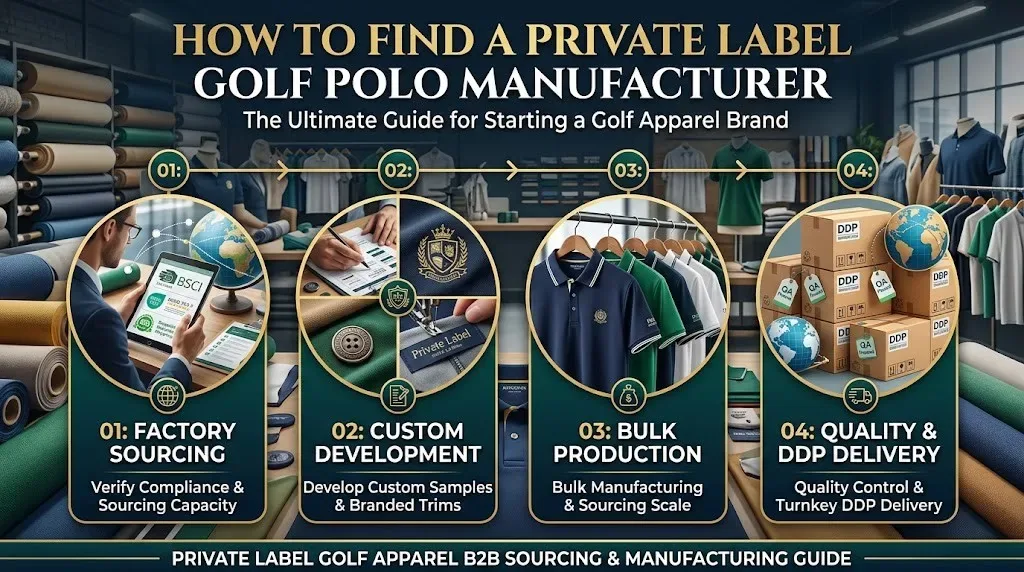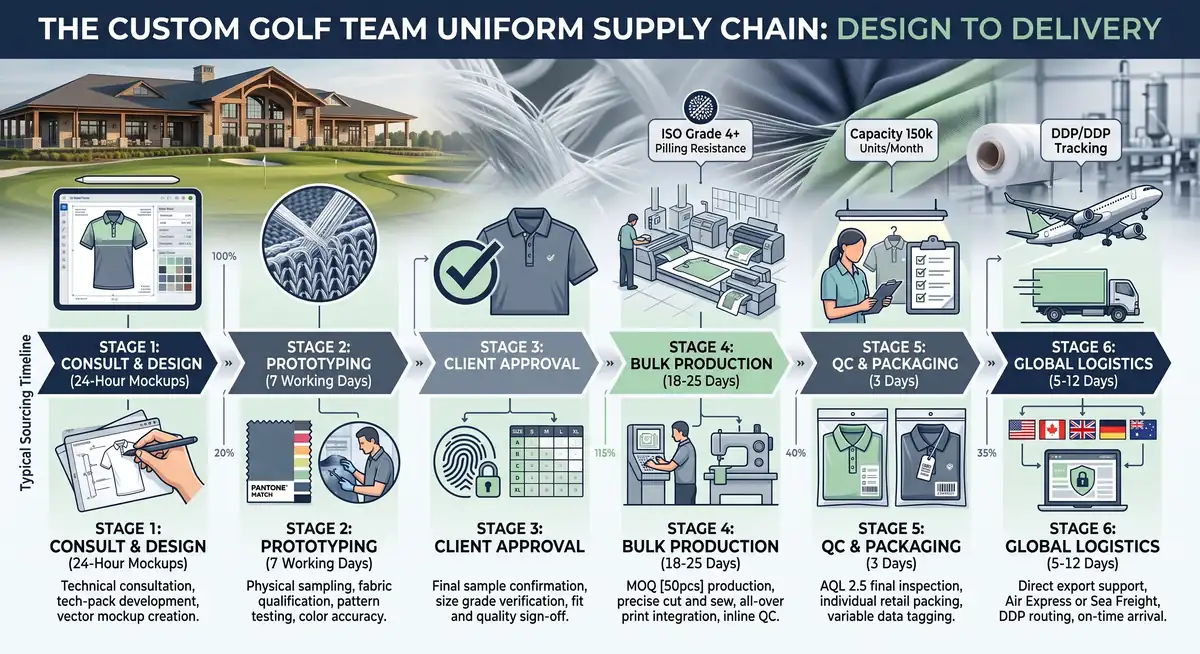
Short answer: private label means the shirt is built to your specification and carries your brand, while the pattern and the production line stay the factory's. The work between a design file and a shipped carton splits into six gates: brief and tech pack, artwork and labels, sampling, size grading, bulk production, and QC and shipping. Each gate has one decision that is expensive to reverse later. On our own line those gates run 50 pieces per colourway, 5-7 days for a sample once artwork is confirmed, and 7-15 days of bulk once the sample is signed off.
What private label buys you, and what it does not
Private label is often sold as "your brand on our shirt". That is accurate but incomplete, and the incomplete part is where budgets break. Four things change hands in a private label order, and four do not.
| Element | Who owns the decision in private label | What it costs you if it goes wrong |
|---|---|---|
| Brand, labels, artwork | You | A wrong main label or care label is not fixable at the end of the line; the whole run is reworked or scrapped. |
| Pattern and size grading | The factory's block, adjusted to your measurements | A proprietary fit is pattern development, quoted separately. It is not included because you sent a sketch. |
| Fabric and knit | Chosen from the mill's available qualities | "Custom fabric" usually carries a fabric minimum, which is a different number from your garment minimum. |
| Country of origin and duty | Set by where fabric and assembly happen | Moving assembly does not automatically move origin, and the duty follows the origin, not the invoice. |
| Compliance testing | Shared, but you are the importer of record | The test report has to exist before the goods ship, not after a marketplace asks for it. |
The four common arrangements are worth separating, because suppliers quote them at different prices for real reasons:
- White label — you buy a stock style and sew your label into it. Fastest and cheapest; you control almost nothing.
- Private label — a stock block with your fabric choice, your trims and your decoration. This is the arrangement most club and corporate programmes actually want.
- OEM — built to your tech pack, including pattern changes. Higher setup, full control.
- ODM — the factory's design, sold under your brand. Fast, but your competitor can buy the same shirt.
Stage 1 — The brief and the tech pack
The brief is the only stage where a mistake is still free to fix. A factory can quote from a paragraph, but it will quote a range, and the range is where the argument starts later. Ten fields remove most of the ambiguity:
- Style and silhouette — polo, quarter-zip, hoodie, dress, and the fit (regular, athletic, boxy).
- Fabric — fibre percentages, knit (piqué, interlock, jersey, mesh) and weight in GSM. "Performance polyester" is not a specification; 170 GSM 92/8 interlock is.
- Collar and placket build — bonded or fused collar stand, two or three buttons, self-fabric or rib.
- Size run and grading — the actual sizes you will stock, not just "S-3XL".
- Decoration — method, placement, dimensions, number of colours, and whether it repeats on sleeve or back.
- Labels — main label, care label, size label, hangtag, and the language each must be printed in.
- Packaging — polybag or compostable bag, carton marks, barcode sticker.
- Quantity per colourway and per size.
- Target price and Incoterm — FOB, CIF or DDP changes who pays for what, not just the number.
- Destination market — EU and US labelling rules are not the same document.
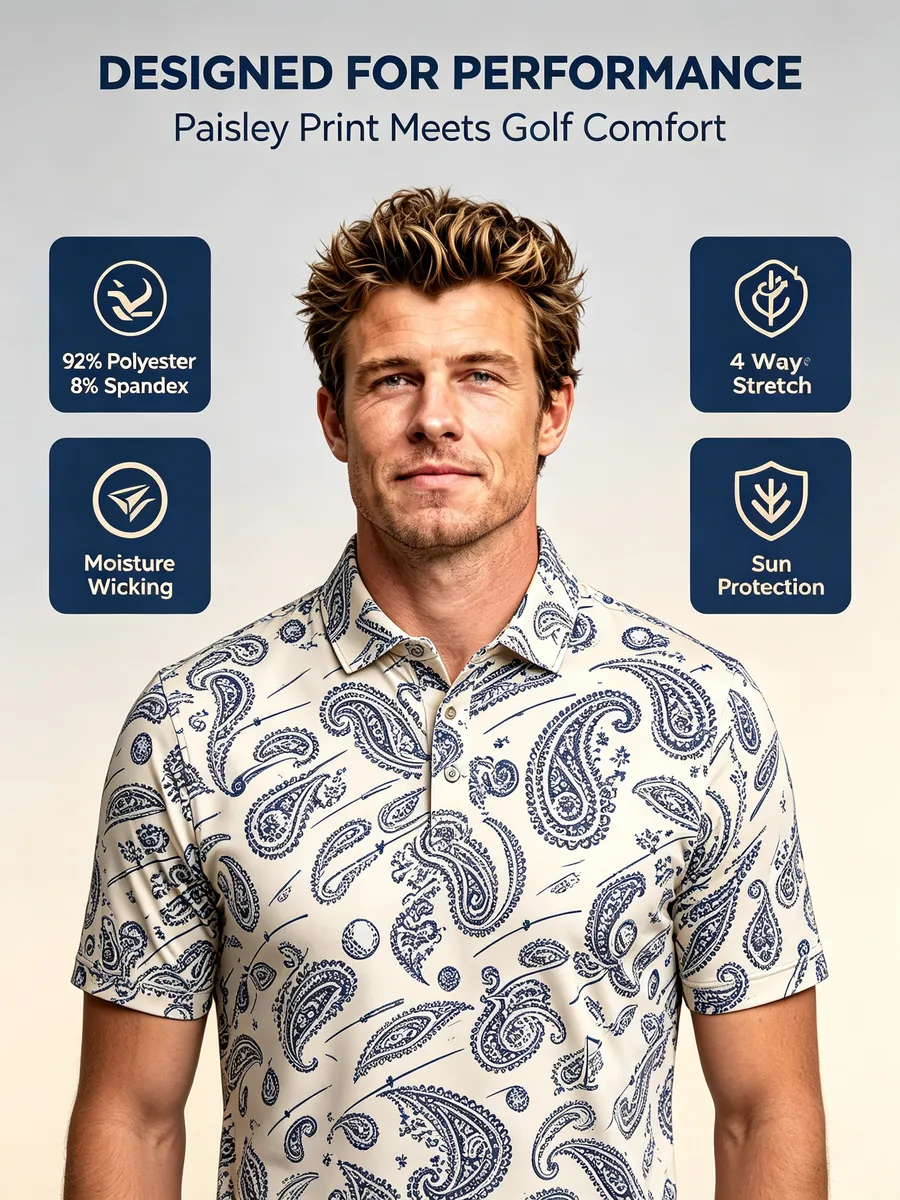
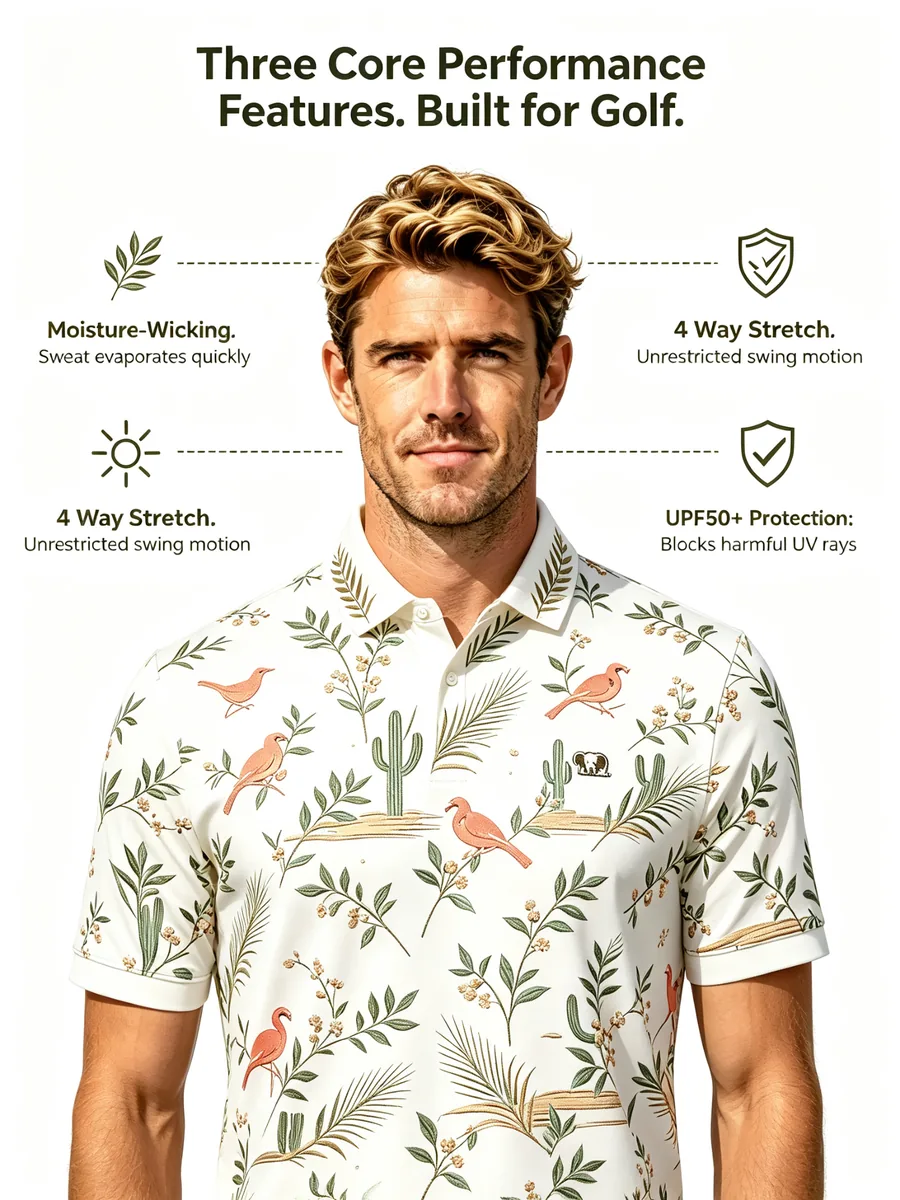
If the brief is for a performance polo, the fabric paragraph is the one to get right first: a 165 GSM mesh and a 185 GSM piqué at the same fibre content behave differently on a body and cost differently per piece. The performance polo specification is a worked example of what a complete brief looks like, from the fibre split down to the size run.
Stage 2 — Artwork, labels and the branding kit
Artwork is the second place where money is saved cheaply. The rule that matters: send vector, not a screenshot.
- File format — AI, EPS or PDF with text converted to outlines. A 300 dpi PNG is acceptable for full-colour print; it is not acceptable for embroidery.
- Colour — give a Pantone (solid coated) or a TCX reference, not "the blue from our website". Screens and thread lots disagree.
- Embroidery limits — small text fills in. Below roughly 3 mm cap height, letters close up on a knit; ask for a sew-out before the run, not after.
- Placement — state width and position, not "left chest". A 90 mm logo and a 60 mm logo are different quotes, and placement drift between sizes is a grading issue, not a decoration issue.
- Labels — the care label carries fibre content, wash instructions and origin, and in the EU it must be in the language of the market you sell into. The main label and hangtag are branding; the care label is a legal document.
- Barcode — the GTIN is yours to obtain. The factory can print and apply it, but it cannot invent a number that retail will accept.
For embroidered programmes, the stitch count is the cost driver and the backing is the comfort driver: heavy coverage on a light knit needs a stabiliser that does not stiffen the chest. Our embroidered polo is specified at 185 GSM partly for that reason — the knit has to carry the stitch density without puckering.
Stage 3 — Sampling: what a sample can and cannot prove
A sample takes 5-7 days after artwork confirmation on our line. It answers four questions and none of the others: does the fit work on a body, does the hand-feel match the GSM you specified, does the colour match under daylight, and is the decoration where you asked for it at the density you approved.
It does not prove that bulk will match it. Two dye lots of the same colour can sit a shade apart; a different sewing line can land a collar 3 mm wider. That is why the sample has to become a golden sample: sign it, date it, keep one sealed at the factory and one with you, and approve it in writing with any deviations listed. Verbal approval is how disputes begin three weeks later.
| Sample proves | Sample does not prove |
|---|---|
| Fit on a real body at your measurements | That grading at 4XL holds the same proportions |
| Hand-feel at the stated weight | That the next fabric lot shrinks the same amount |
| Colour under your light | That the bulk dye lot matches the sample swatch |
| Decoration placement and density | That the embroidery backing survives 50 washes |
Stage 4 — Size grading and the size set
One sample in size M does not prove a size run. Grading is a separate step in which the pattern is scaled size by size, and it is where cheap production fails quietly: the middle size fits, and the 4XL is 4 cm short in the body.
Ask for a measurement chart before bulk — chest (half), body length, shoulder, sleeve, neck opening — with the tolerance stated. For knits, plus or minus 1 cm is normal; anything wider will show up as a size that behaves like its neighbour. Check the smallest and the largest size on an actual person, not only the middle one. If your range runs to 5XL, the end sizes are the ones to fit-test, because grading errors amplify at the ends.
Stage 5 — Bulk production
Bulk runs 7-15 days after sample approval on our standard terms, assuming the approved fabric is available in the approved colour. A custom dye lot sits outside that window and should be planned separately.
Five checkpoints make the difference between a run that ships and a run that ships twice:
- Fabric lot approval — a swatch from the actual bulk lot against the golden sample, approved before cutting.
- Cut ticket approval — the size ratio and marker layout, approved before the blade goes in.
- First-off approval — the first finished piece, fully trimmed and decorated, approved before the line continues.
- In-line check — around 30% through the run, when a systematic error is still cheap to correct.
- Final inspection — AQL sampling against the golden sample, with the result written down.
The failures that recur are boring and predictable: shade variation between dye lots, embroidery backing visible through a light knit, a main label caught in the seam allowance, and a size ratio that does not match the order because the cut was rounded to a marker.
Stage 6 — QC, packing and shipping
Put the inspection standard in the purchase order, not in an email. AQL 2.5 for major defects is the common buyer specification; whatever you choose, it has to be written before production so that the inspection has a reference.
Ask for the carton dimensions and weight before booking freight — a carton that is 2 cm over a carrier limit changes the whole quote. Packing list, carton marks and the barcode sticker should be agreed with the same care as the label. On our terms, DDP delivery to the EU runs 28-35 days in total from sample approval; the Incoterm decides who clears customs, and that is a cash-flow question as much as a legal one.
Documents to expect: commercial invoice, packing list, HS code (6105.20 for knitted shirts, 6203.42 for woven), and a certificate of origin where a trade agreement applies.
What it costs, and where the money actually goes
Across our current range, short-sleeve polos land between $8.90 and $16.50 per piece depending on style and quantity, with outerwear and sets running to $24.00. The number that matters is not the unit price but which costs are fixed: at 50 pieces the fixed costs dominate, and they are what you are really paying for.
| Cost element | What drives it | Where money leaks |
|---|---|---|
| Fabric | Fibre, weight, dye lot size | Ordering a custom colour below the mill minimum, then paying a small-lot surcharge |
| Cut, make, trim | Minutes per garment, number of panels, collar build | A complex placket that was not costed in the brief |
| Decoration | Stitch count for embroidery, colours and area for print | Redesigning artwork after the sample, which restarts setup |
| Labels and packaging | Woven versus printed, number of label types | Rush-printing hangtags locally at three times the factory price |
| Sampling | Number of rounds | Approving a sample you were not happy with, then paying for the second one anyway |
| Freight and duty | Incoterm, volume, origin | Choosing FOB to "save money" and then discovering the forwarder cost |
Decoration setup is a one-time charge — currently about $80 per logo on our side — and it does not repeat on the second run of the same artwork. That single fact is the reason a second order of the same style is materially cheaper than the first, which is explained in more detail in the small-batch cost breakdown.
The five failures that cost the most
- A brief with no GSM and no fibre percentages. The quote is real, the shirt is not the one you imagined.
- A raster logo. Redrawing it is a day of design time, and the redo sits on the critical path.
- No signed golden sample. Every later conversation becomes one person's memory against another's.
- Skipping grading at the ends of the size run. The 4XL that fits nobody is still a full-size cost.
- Choosing decoration after the fabric. High-density embroidery on a open mesh is a puckering problem, not an embroidery problem.
The timeline, in weeks
| Week | What happens | What you owe |
|---|---|---|
| 0 | Brief, fabric selection, quote | Tech pack or a complete brief; target quantity per colour |
| 0-1 | Artwork, label copy, colour references | Vector artwork, Pantone/TCX, legal label text |
| 1-2 | Sample (5-7 days after artwork confirmation) | Feedback in writing, with a deviation list |
| 2 | Sample sign-off, grading, measurement chart | Golden sample signature |
| 3-4 | Bulk (7-15 days after approval) | Fabric lot and first-off approval |
| 4-6 | Final inspection, packing, transit | Inspection standard in the PO; freight booking |
Total DDP to the EU: 28-35 days from approval. The lead-time article breaks down which of those days are production and which are transit.
FAQ
Do I need a registered trademark to order private label?
No. Production does not require a registered mark, and the factory does not verify ownership. Registration matters when you need the brand to be enforceable, or when a marketplace or a retail buyer asks for it. Get the filing in early anyway: it takes longer than the first production run.
Can you make 50 pieces with my own label?
Yes. Our minimum is 50 pieces per colourway across the range, and two styles ladder from 30 pieces. The minimum applies per colour, not per order, so four colourways start at 200 pieces. The MOQ article explains how colour and size ratios interact with that number.
Who owns the pattern?
The factory's base block stays the factory's unless you pay for pattern development; if you do pay for it, get ownership in writing before the first cut. Your artwork, your brand and your label designs are yours, and that should also be written down rather than assumed.
What happens if bulk does not match the sample?
That is exactly what the golden sample and the AQL inspection exist for. The purchase order should state the remedy — rework, replacement or credit — and the tolerance for shade and measurement. A supplier who will not put that in the PO is telling you something.
Can I mix sizes inside one 50-piece order?
Yes. The minimum is per colourway, not per size. The size ratio is agreed in the purchase order and drives the cutting marker; changing the ratio after the cut has started usually means a new cut.
Sources
- Mega Elephant product specification records, 2026-10 (fibre content, knit, GSM, size runs, price ladders, decoration methods)
- Mega Elephant standard production terms, 2026-10 (50-piece minimum per colourway, 5-7 day sampling, 7-15 day bulk, 28-35 day DDP to the EU, ~$80 one-time logo setup)
- The figures in this article are manufacturing specifications and catalogue prices, not results from independent laboratory testing